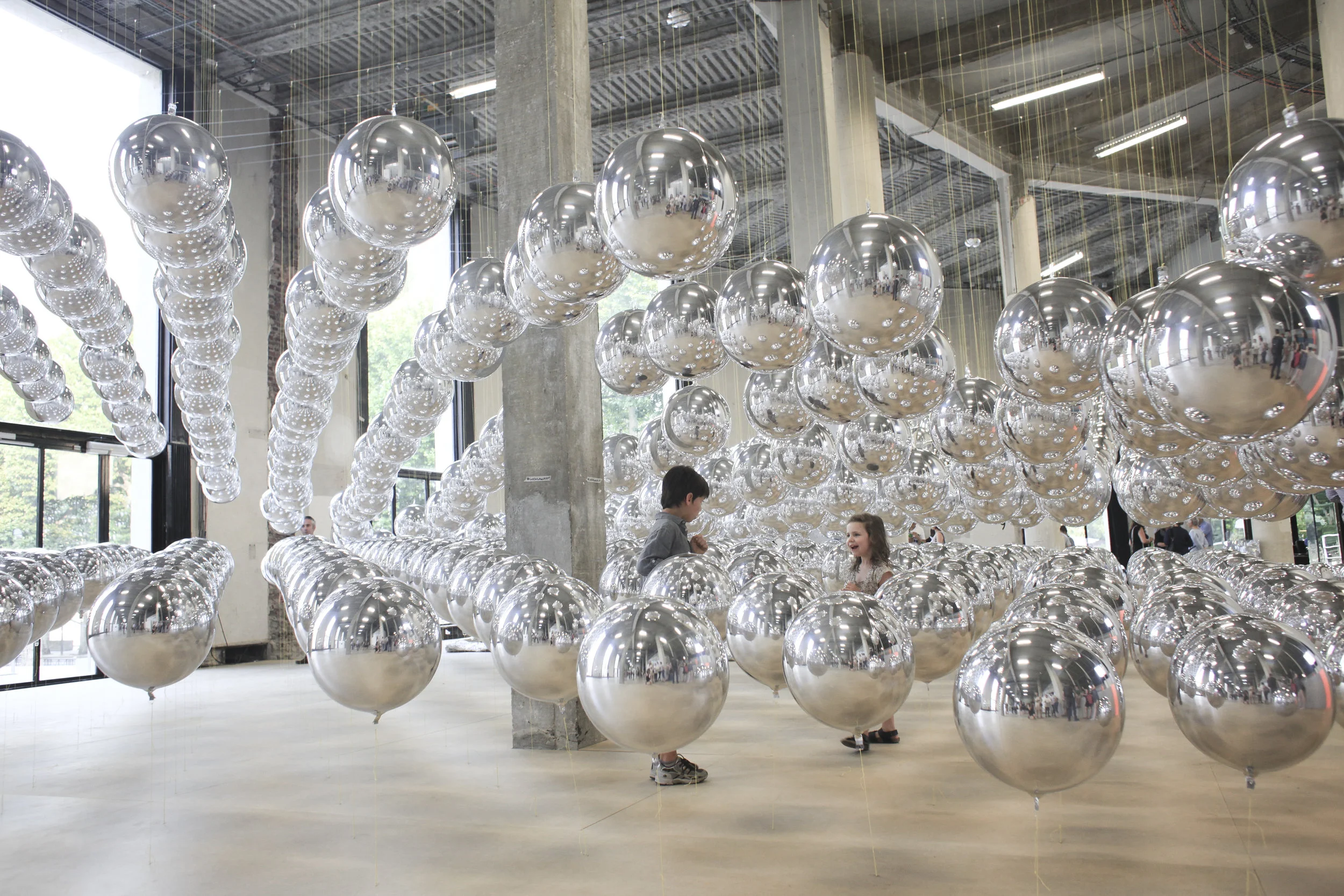

Going away
Interactive Installation at Palais de Tokyo, Paris, France
Going away came out of a collaborative workshop in Paris lead by Tomas Saraceno, exploring lighter than air objects. The idea and conceptual driver behind the installation was creating a space which could change and morph when occupied and moved through, resulting in multiple perspectives and individual experiences within the same space.
Design-Build Team: Arkadiusz Piegdon, Claire Kao, Davi Weber, Diego Rodriguez, Harry Byron, Jaclyn Jung, Jim Stoddart, Mondrian Hsieh, Sissily Harrell, Taylor Miller, Tianhui Shen, Vahe Markosian
Advisors: Tomas Saraceno, Asaf Gottesman
Technical Advisors: Phillip Anzalone, Architect Michel Serratrice.
Exhibition was made possible by Columbia University’s Graduate School of Architecture, Planning and Preservation (GSAPP) - Laboratory for Applied Building Science.
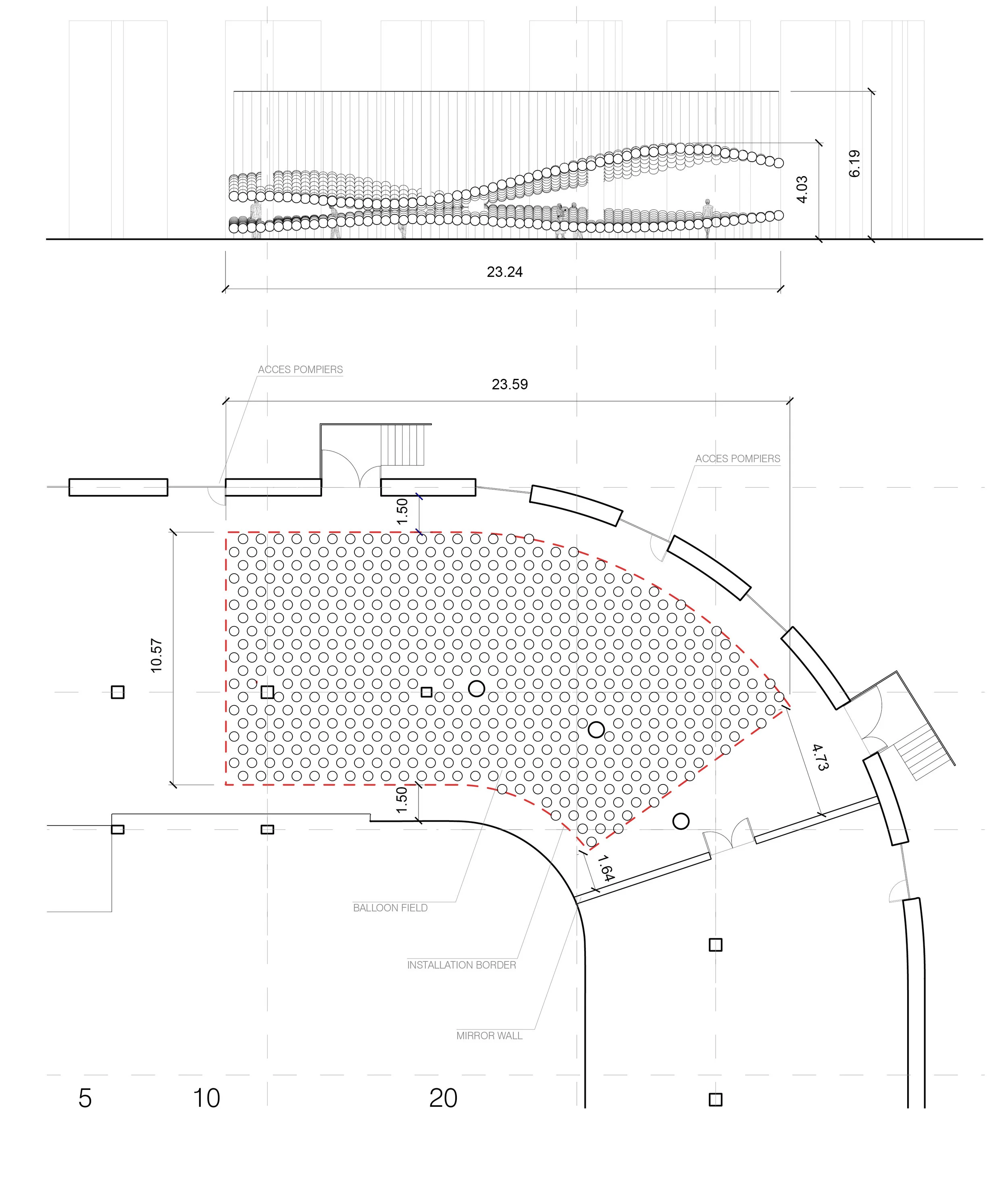
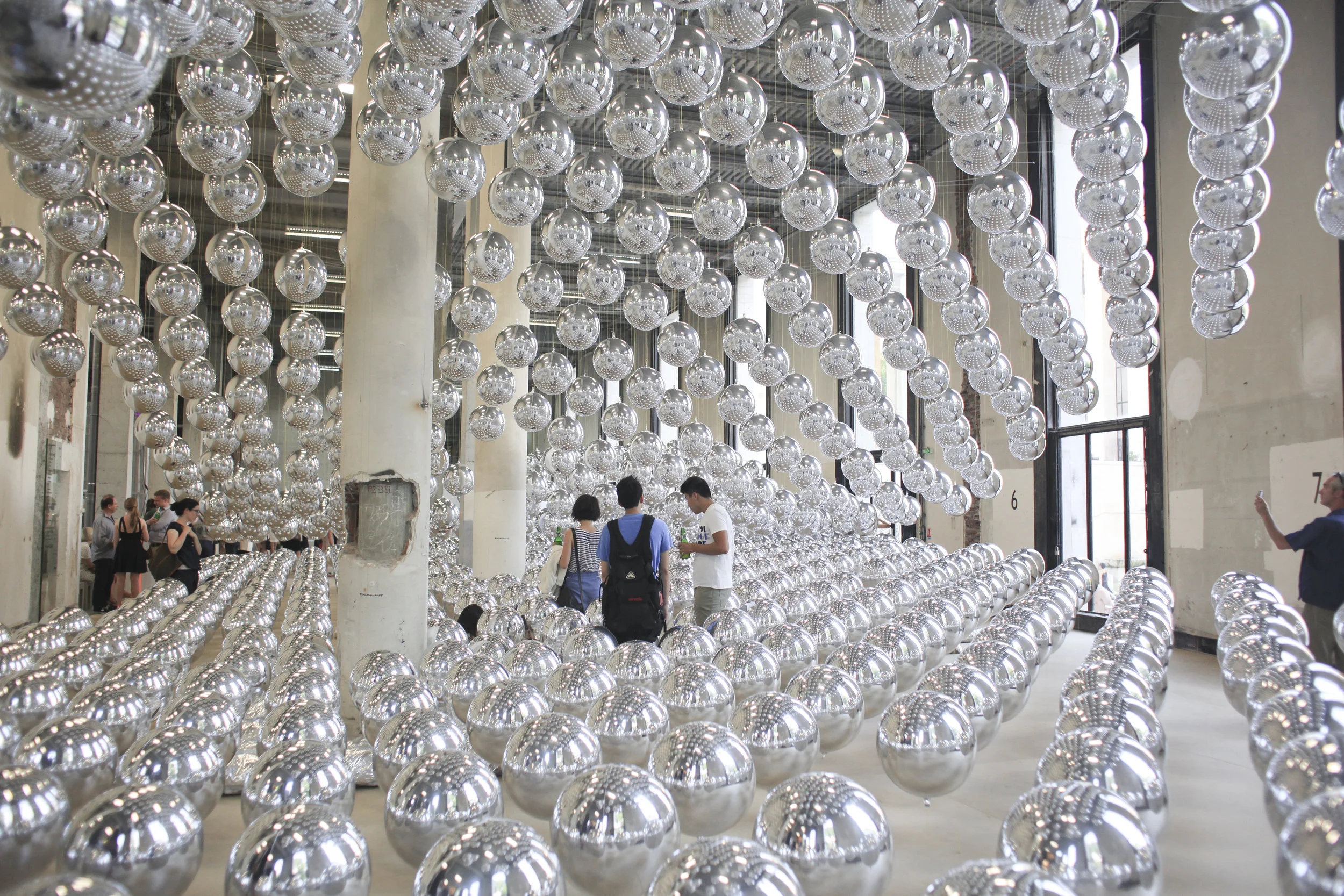
The catalyst for creating layers of space is a reverse relationship between helium and air filled balloons. Generally helium balloons float high above the ground, but in this world they are tethered, and straining to reach upward. Meanwhile their air filled counterparts which normally would be resting on the ground, are suspended in the air from a wire grid high above. This push and pull creates a palpable tension through which the occupants walk: sometimes above, sometimes below, sometimes inside of the juxtaposed landscapes.
In plan, the balloons are arranged in a diagrid, so the occupant's path through the medium is never direct, and they can never really see where they are going. This results in moments of disorientation when one finds themselves in a 'valley', and surprise when they emerge into a 'cave'.
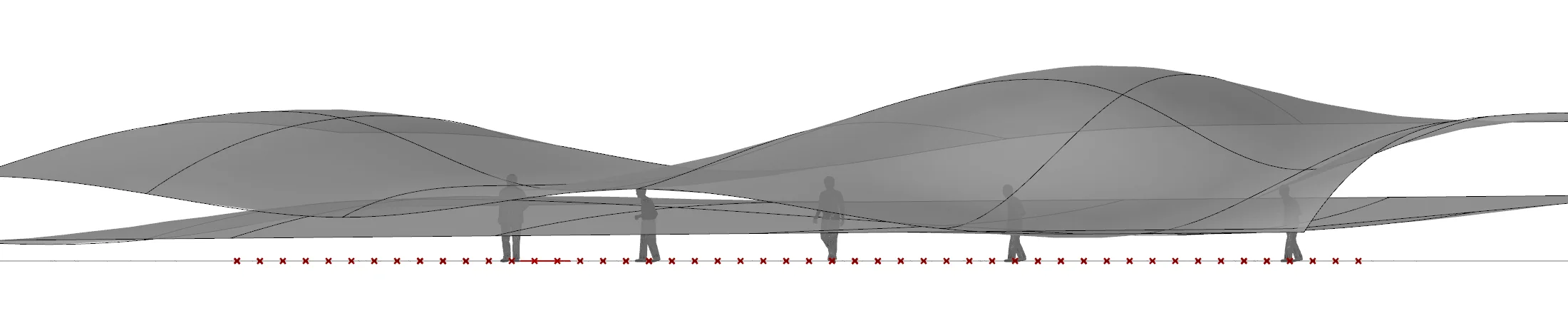
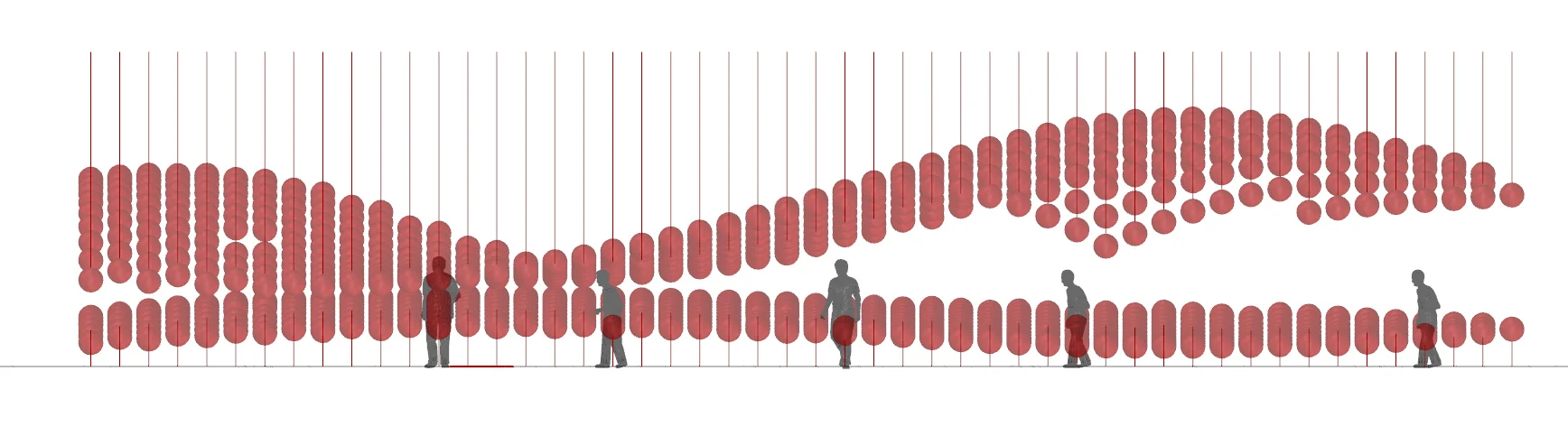
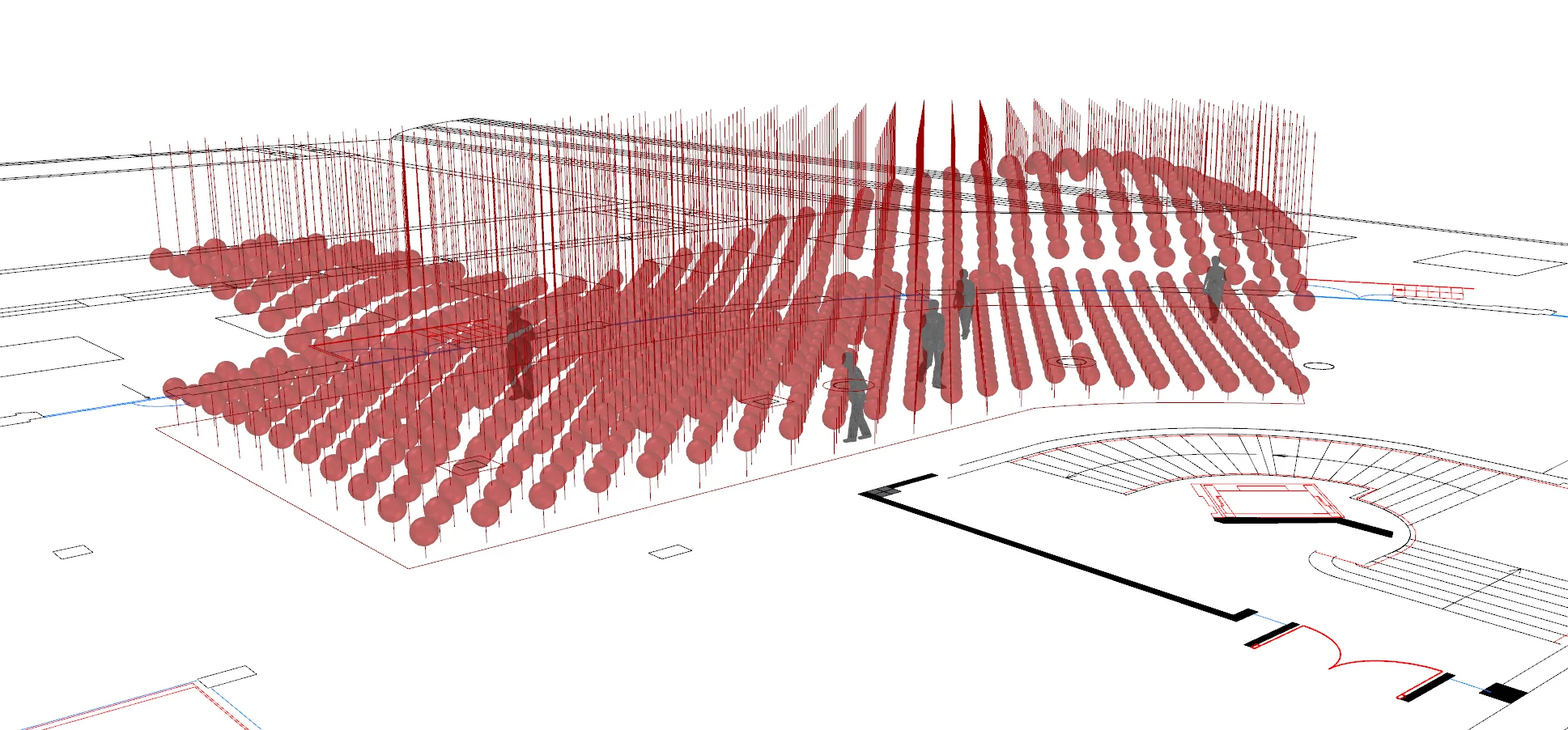
The exhibition was built with the aid of a parametric software which allowed us to accurately model our physical components and create an assembly line like process for fabrication and installation.
We were able to create tags for the two corresponding grids which contained 3 data points: Location, Top Length, Bottom Length. With these three data points we were able to number them according to install order, and then cut the fishing line to the corresponding lengths. Concurrently, the install team mapped the grid in the hair using cherrypickers and metal wire. Then a secondary team went through and with the help of plumb lines marked corresponding lower grid points. Finally a third team came through and inflated the balloons (one helium and one air), and attached them to the lines. Overall install took about 3.5 days, which I believe is extremely fast for a process this meticulous.