
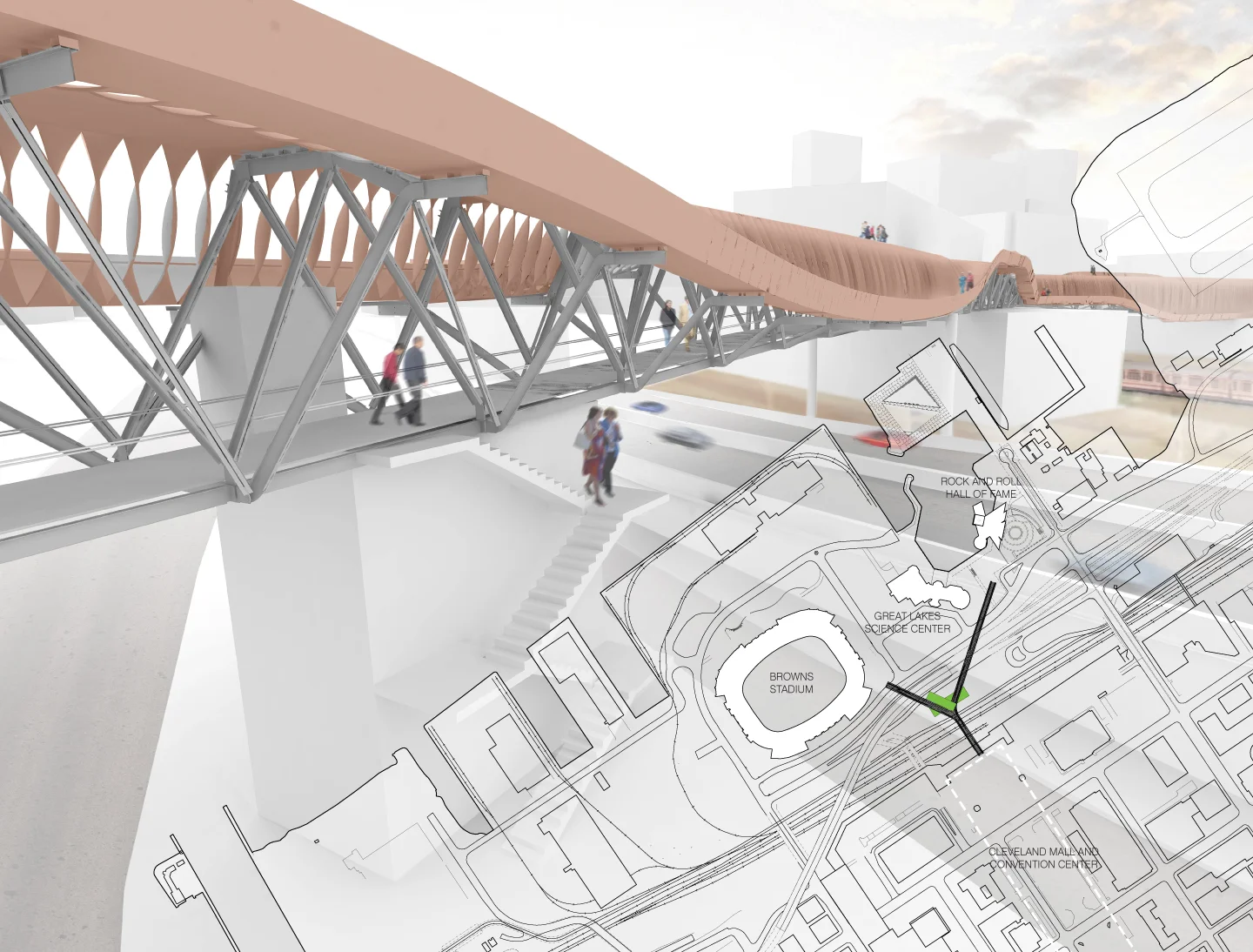
ADAPTIVE CONNECTIONS
Modular, Prefabricated Steel Bridge in Downtown Cleveland, OH
This bridge was designed for the ACSA National Steel Design Competition and received second prize. The driving idea behind the bridge design was to find a way to use steel in an efficient yet expressive manner - linking not only downtown Cleveland to the waterfront, but the modern city to it's manufacturing past.
We designed a dynamic, pre-fabricated module which can be varied to adapt to given input conditions. These modules would be factory built - all parts being computer generated and cut, eliminating the need to shop drawings and lengthy custom construction timelines.
Team: Andrew Maier, Vahe Markosian, Mark Pothier, Jim Stoddart
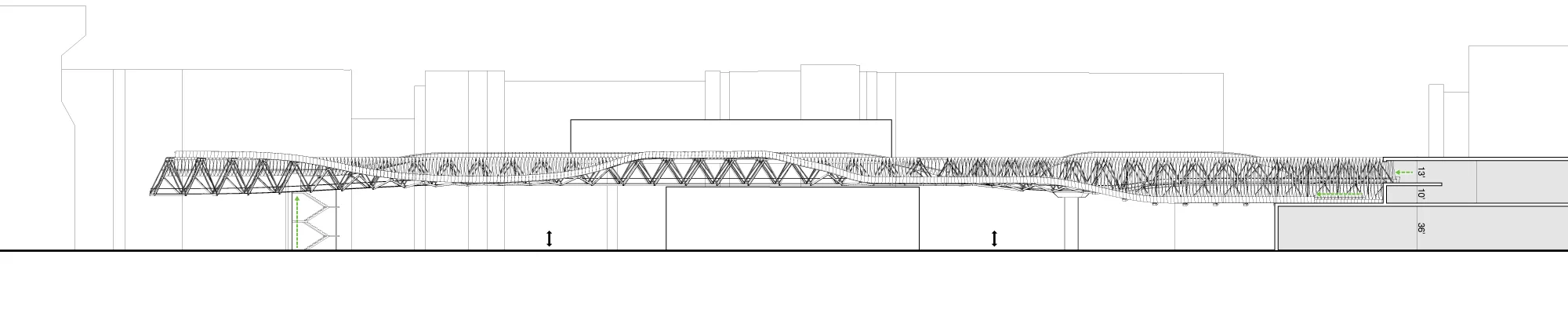
The cross-sectional structural and decking system creates a varying topography that hosts an array of opportunities for interaction with the surrounding context. Multi-level passage allows for dynamic experiences along length of the bridge, including places of rest (benches), transition from inside (truss) to outside (deck), and views to waterfront, contextual architecture, and the transportation corridors that run below.
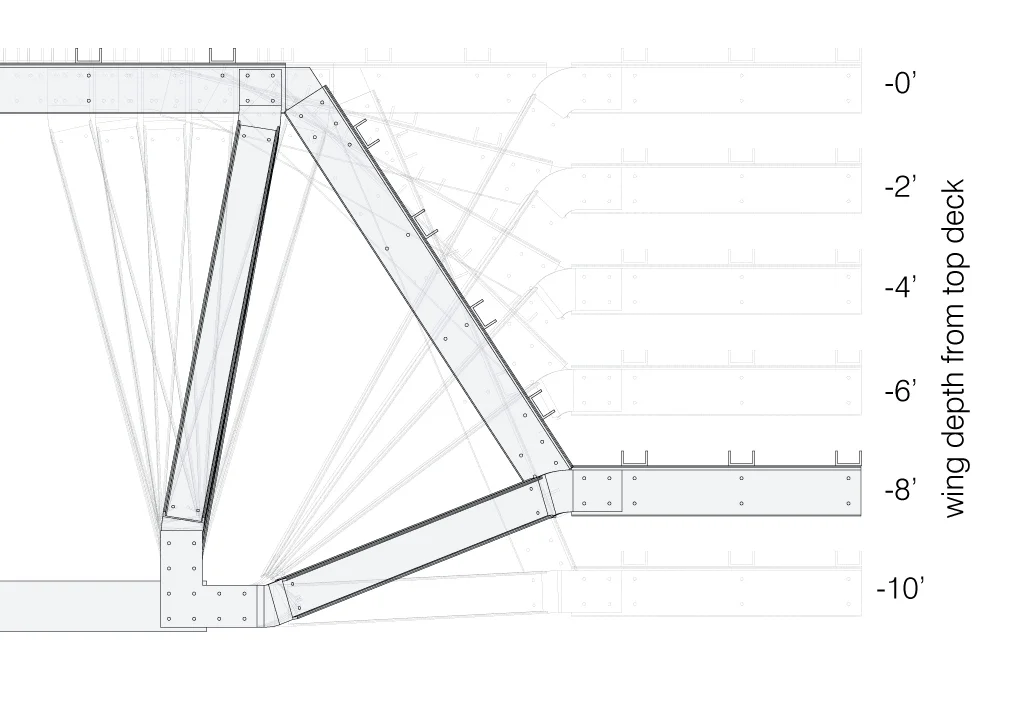
Structural Module Range of Adaptability
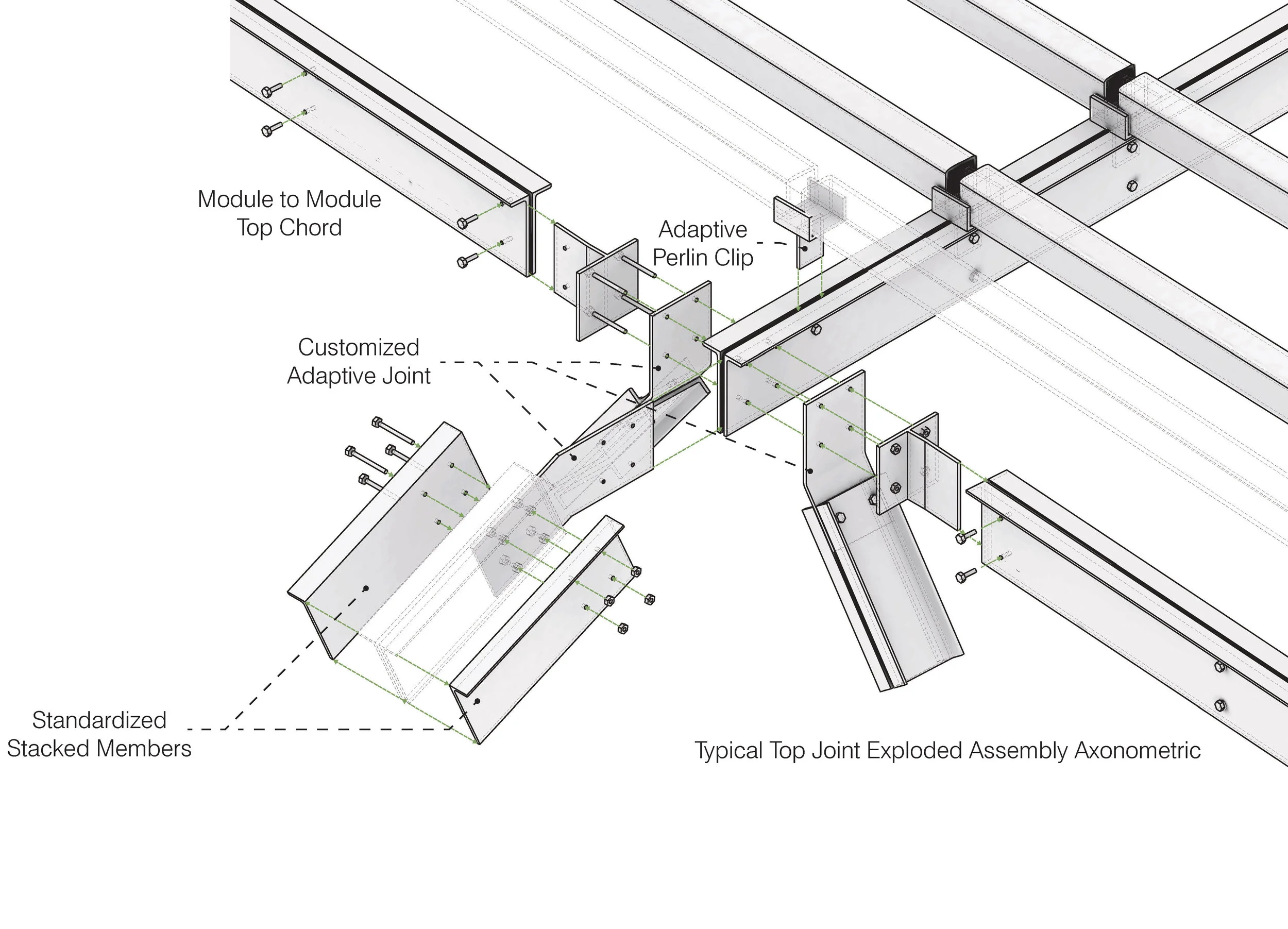
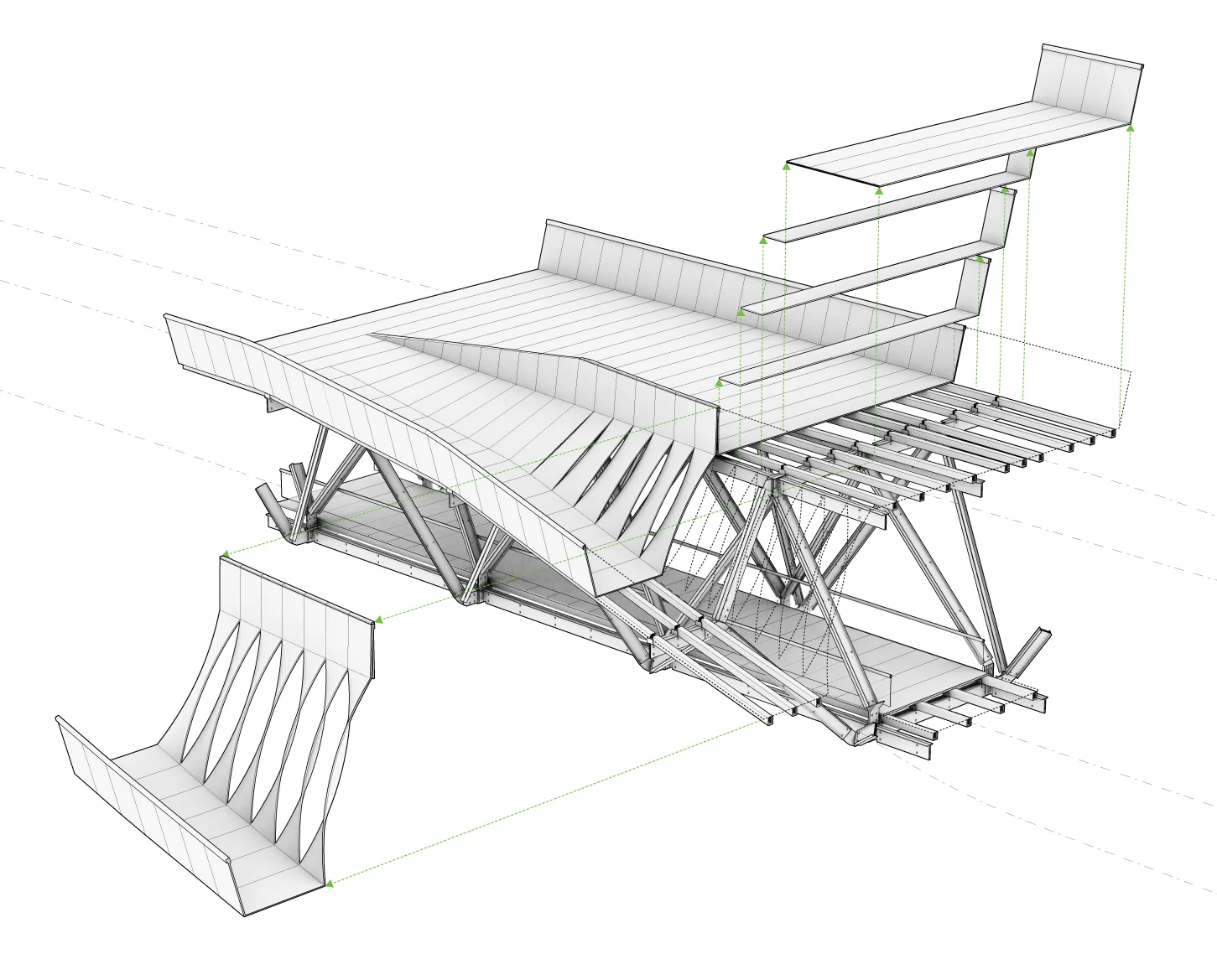
Component Assembly Diagram at Top of Structural Bay
Comprised of a series of prefabricated metal elements this bridge was designed considering a direct software to fabrication pipeline.
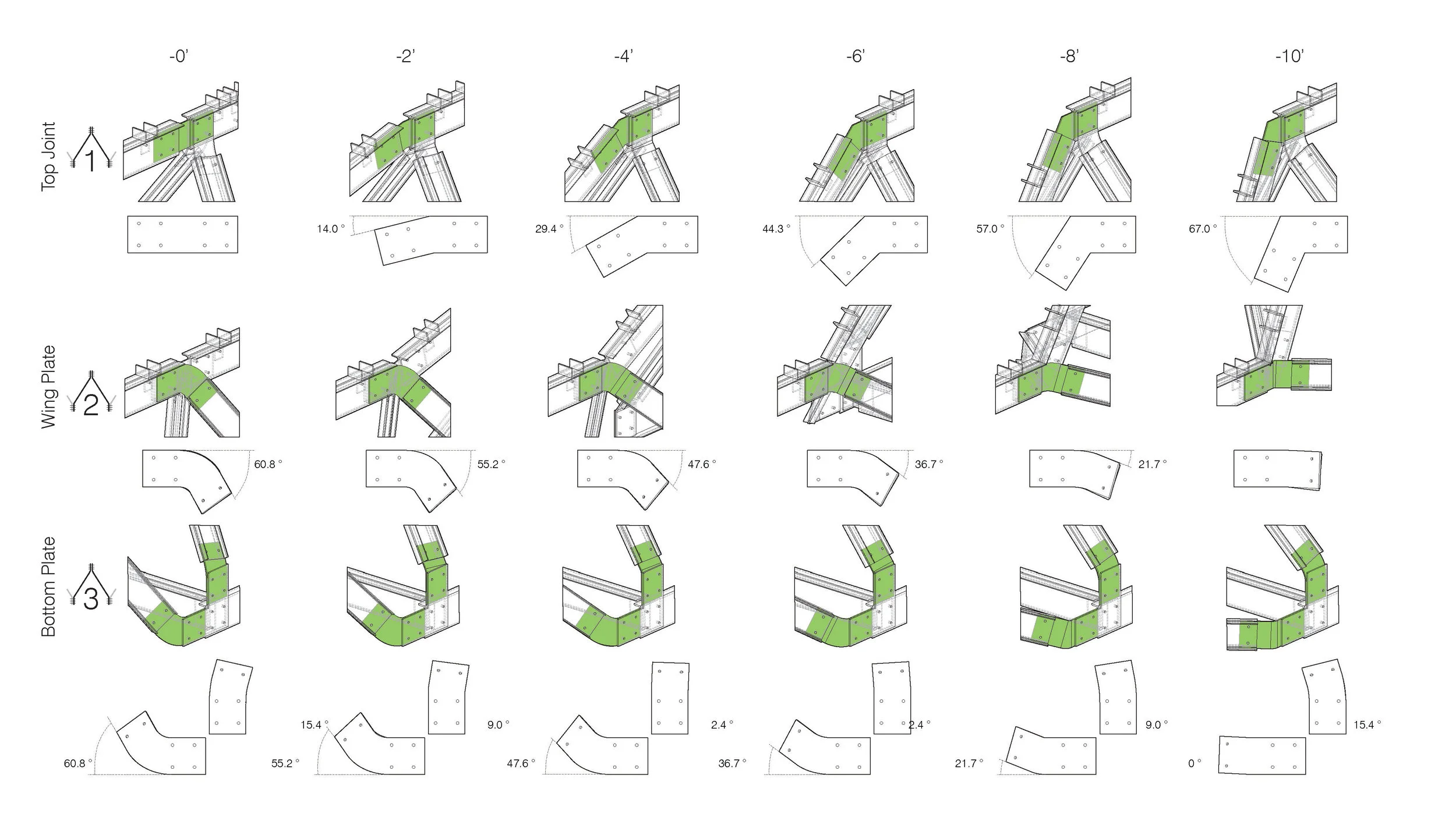
The parametric structural bay is conceived through a combination of standard stock steel extrusion members and custom, water-jet-cut connection plates. Sandwiching the plates between the steel extrusions and using them as hinges allows for geometric variability with minimal customized steel and provides repeatable, varied connection details for simple, efficient, shop-built construction.
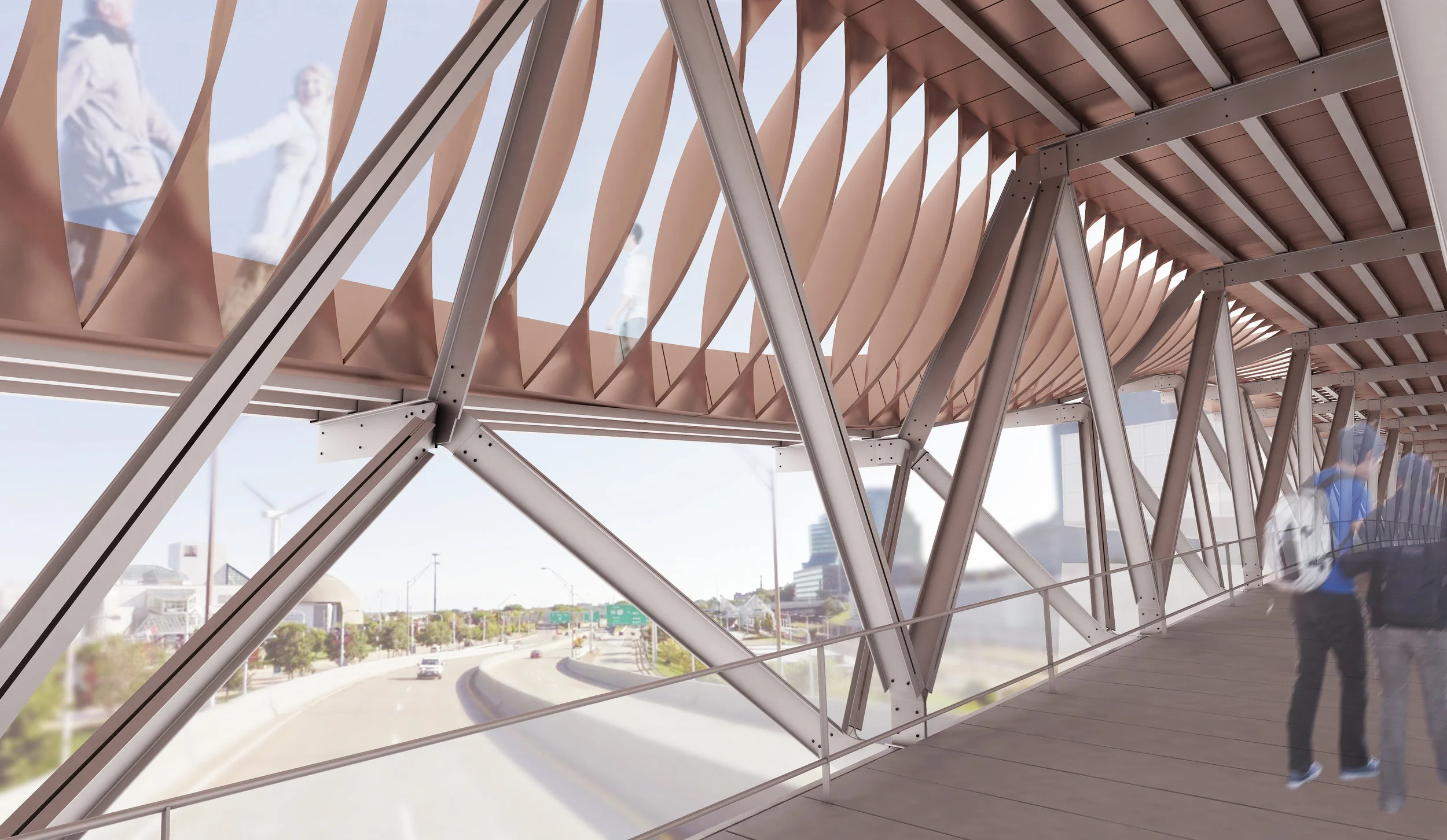
Strings of purlins, hosted by the structure, support the varying decking that wraps across these bays. The decking is comprised of strips of bent plate steel, articulated to meet the programmatic and experiential intentions of the bridge design. Along the outer wings, the decking transforms into seating benches. On non-horizontal stretches, the decking is twisted to reflect the gradation with the slope of the surface to provide open views through to the surroundings.