
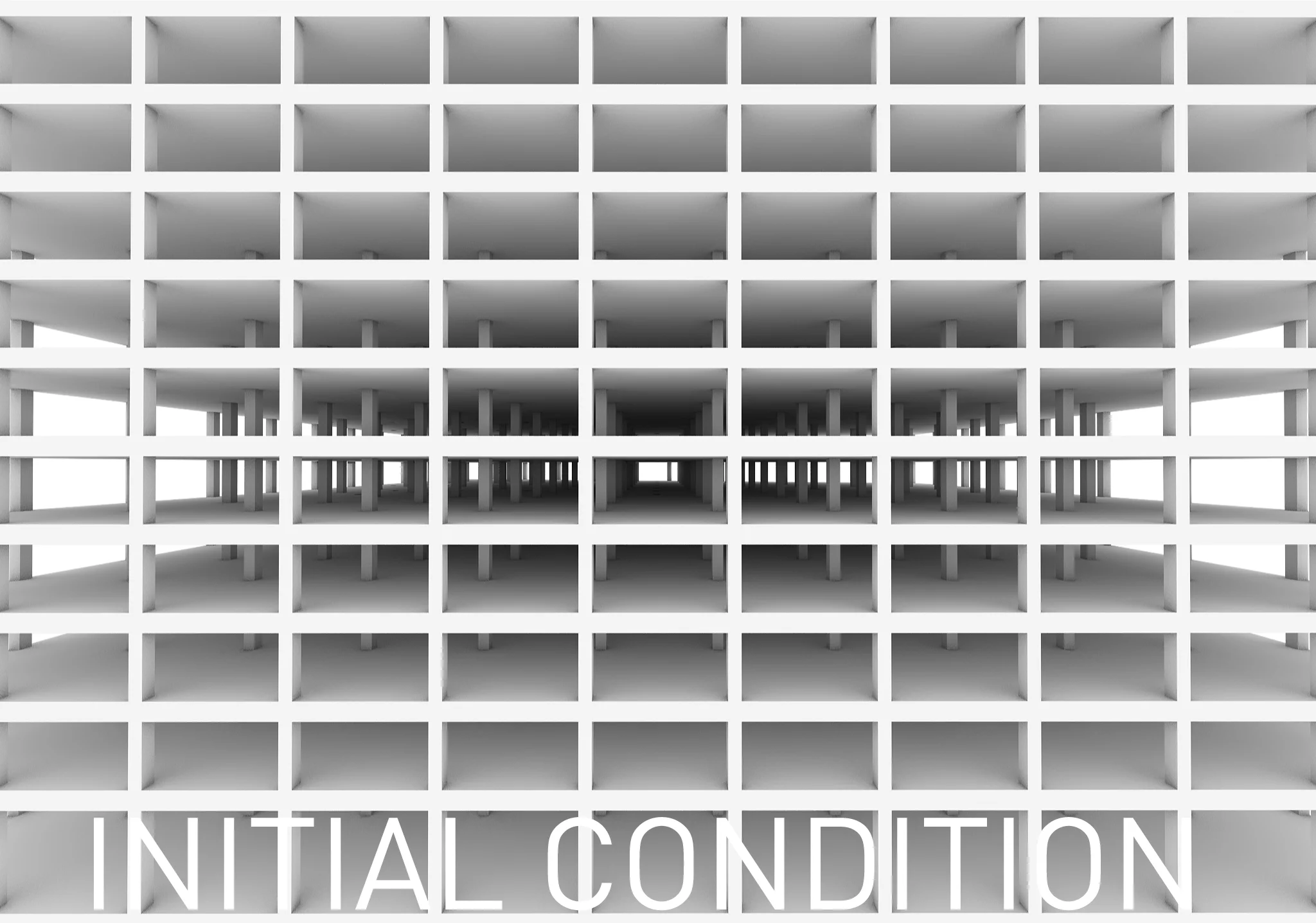
tools for critical retrofit of manhattan office space
According to the Terrapin study titled Midcentury (Un)Modern, a large number of office buildings in Manhattan built between 1958 - 1973 contain B and C class office spaces both for environmental and qualitative reasons. Furthermore, their inadequate structural capacity renders many of these buildings ill-equipped for improvements such as double glazing, new HVAC systems, etc. It follows that in many cases is it cheaper to tare these buildings down.
Our goal was to create a tool that would enable retrofit through targeted intervention and allow for a critical cost/benefit analysis of different intervention configurations, ideally tipping the scales in favor of adaptive reuse.
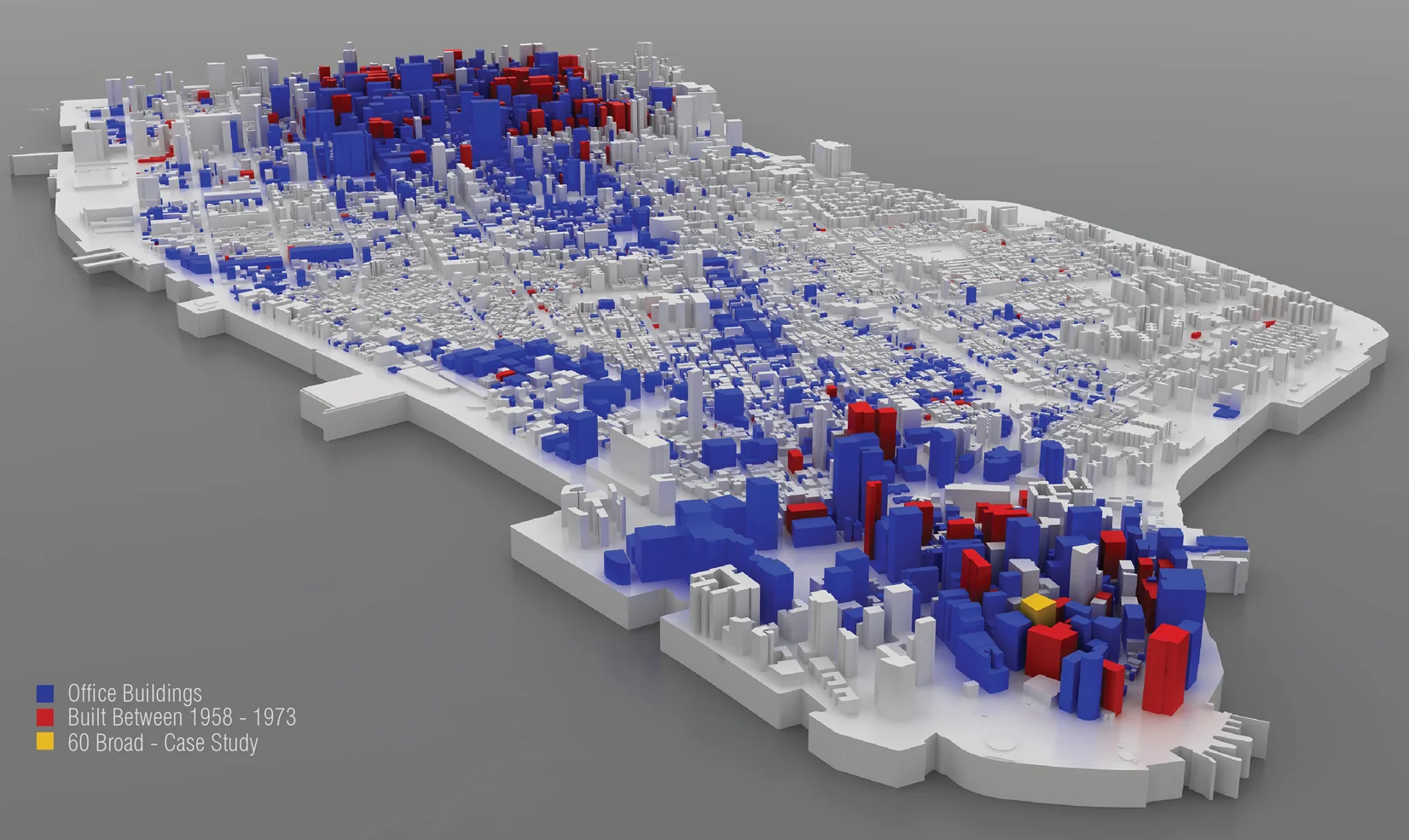
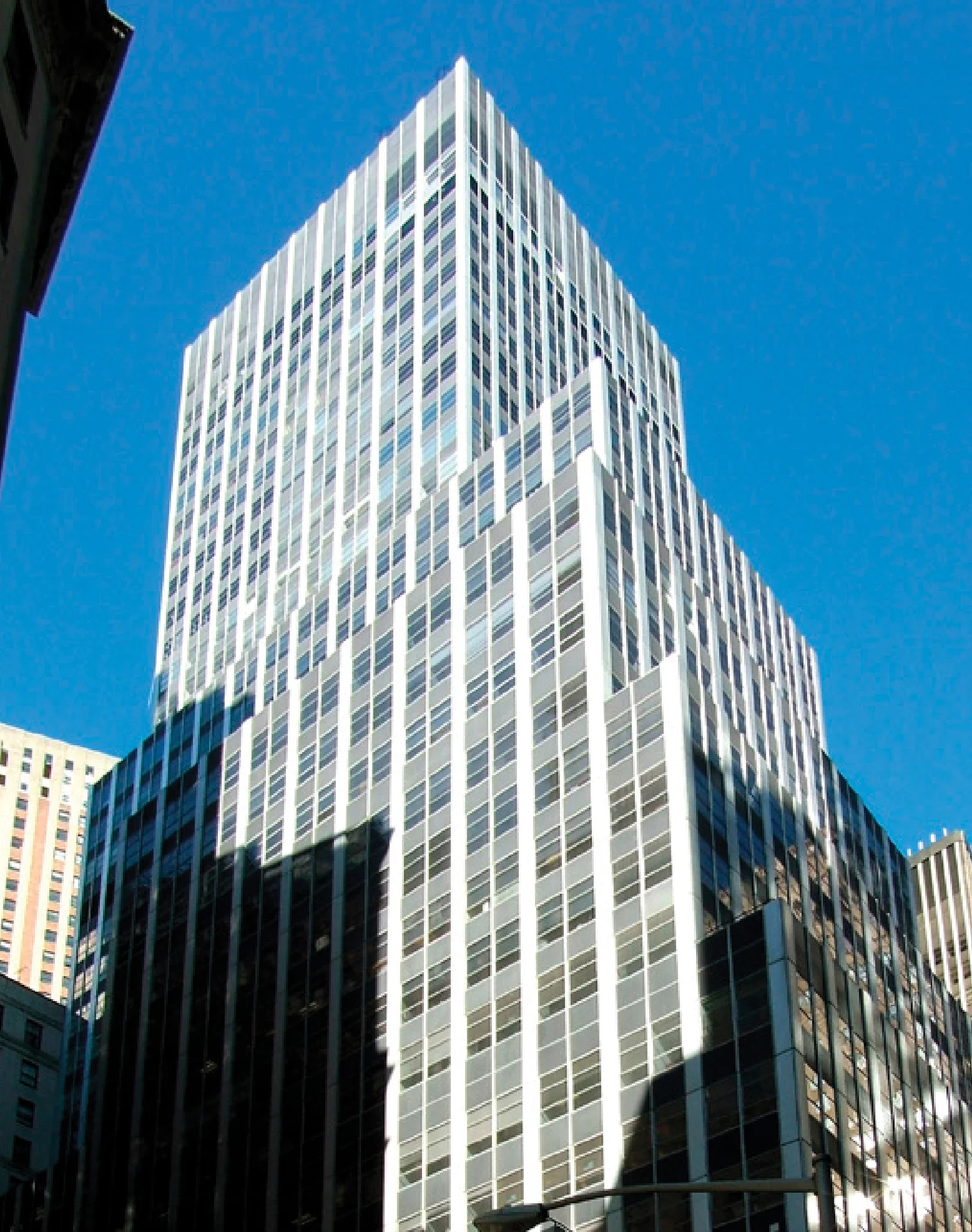
As a case study we chose 60 Broad St., an office tower in lower Manhattan designed by the firm Emery Roth & Sons and built in 1961. We chose this specific tower because it is a typical example of an aging Manhattan office tower with no class A office space and a number of environmental and thermal comfort issues.
Our goal was to enable a redefinition of value within this specific office tower typology. Current market value is solely rent-driven and therefore governed by the financial interests of the building owner.
However, both a changing culture and a changing market in downtown Manhattan suggests rethinking this value system. Our proposal is to create hybridized value between finances and employee experience/productivity.
Given that each business has diverse needs, we aimed to create a retrofitting tool that would provide heterogeneity through spatial typology and microclimates - negotiated through the tradeoff of dead load in the slabs and facade - in order to improve employees daily routines and physiological working conditions.
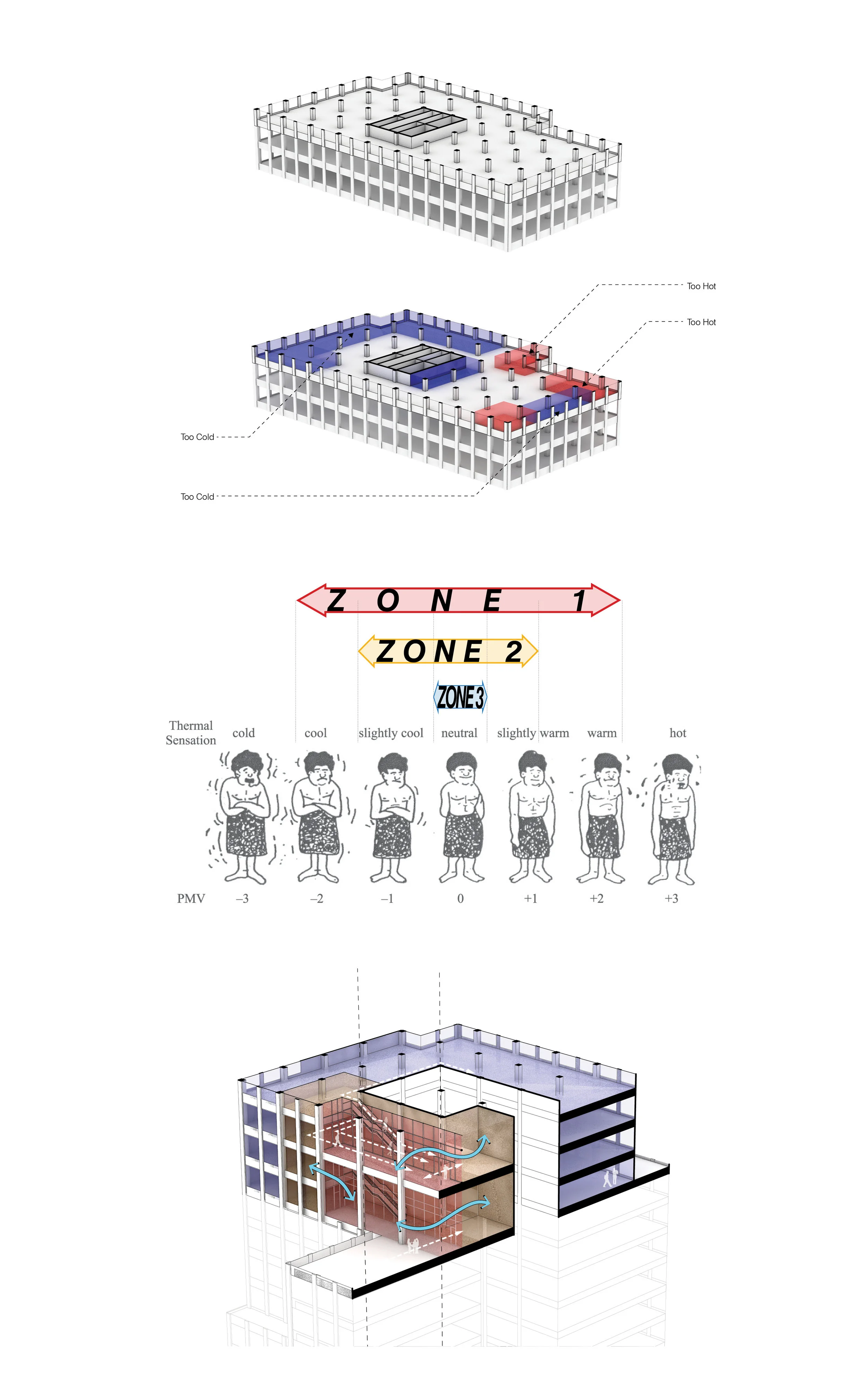
This typology of building is poorly insulated because of an aging envelope which was built well before our recent technological advances is glass insulation. Further exacerbating the problem is that retrofitting these facades is very difficult and costly because of the strain of additional dead-load on the aging structure.
Current conditions are an uneven patchwork of climate zones which get too cold in the winter, too hot in the summer, and not enough light any time of year.
Conventions dictate that an office space needs to maintain a 0 Predicted Mean Vote value (a measure of thermal comfort in climate controlled zones) in order for it to be deemed class A. However according to our research, employees productivity goes up when heterogeneity is introduced into their routines and their environments. Therefore we posed the question – instead of trying to seal and climate control the entire building to a single rigid PMV rating, can we create clearly defined spaces with thermal fluctuations, taking advantage of environmental conditions in our given building using our tool?

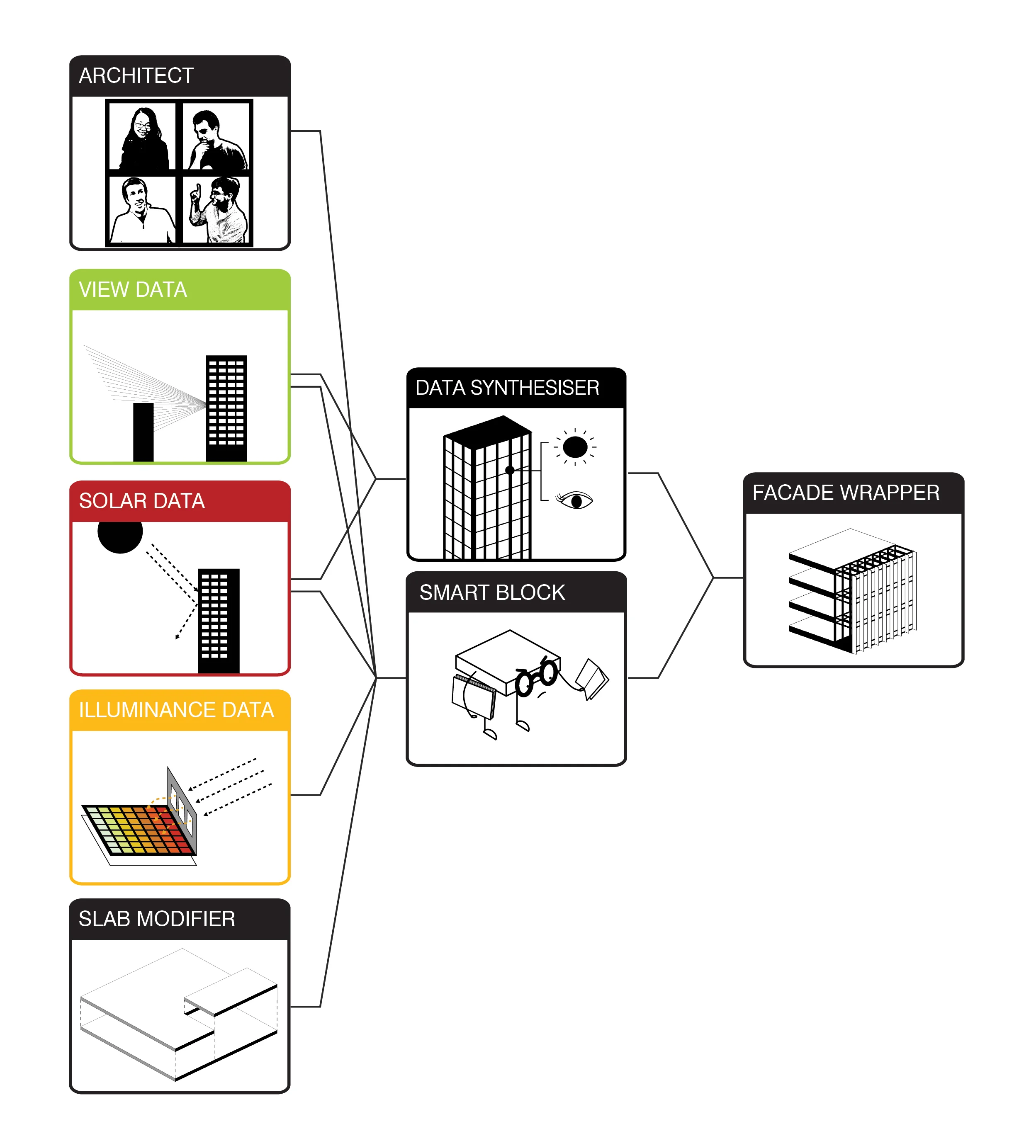
By using analytical tools created by each of our team members and integrating them into a single integrated model, then bringing in additional architect driven space planning decisions, we were able to generate unique building interventions which were measured through a set of criteria and compared to one another to determine their effectiveness in achieving a chosen objective.
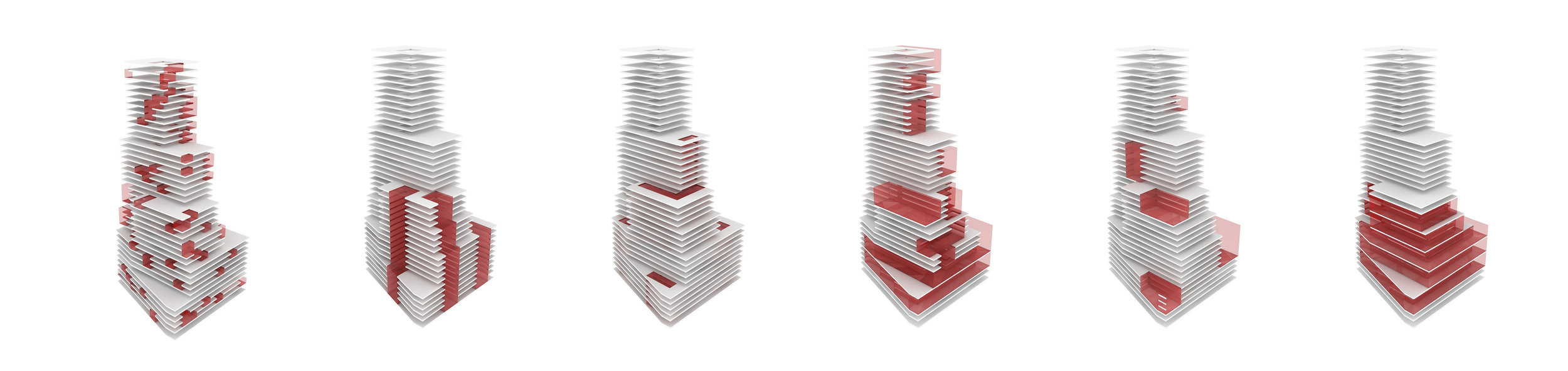
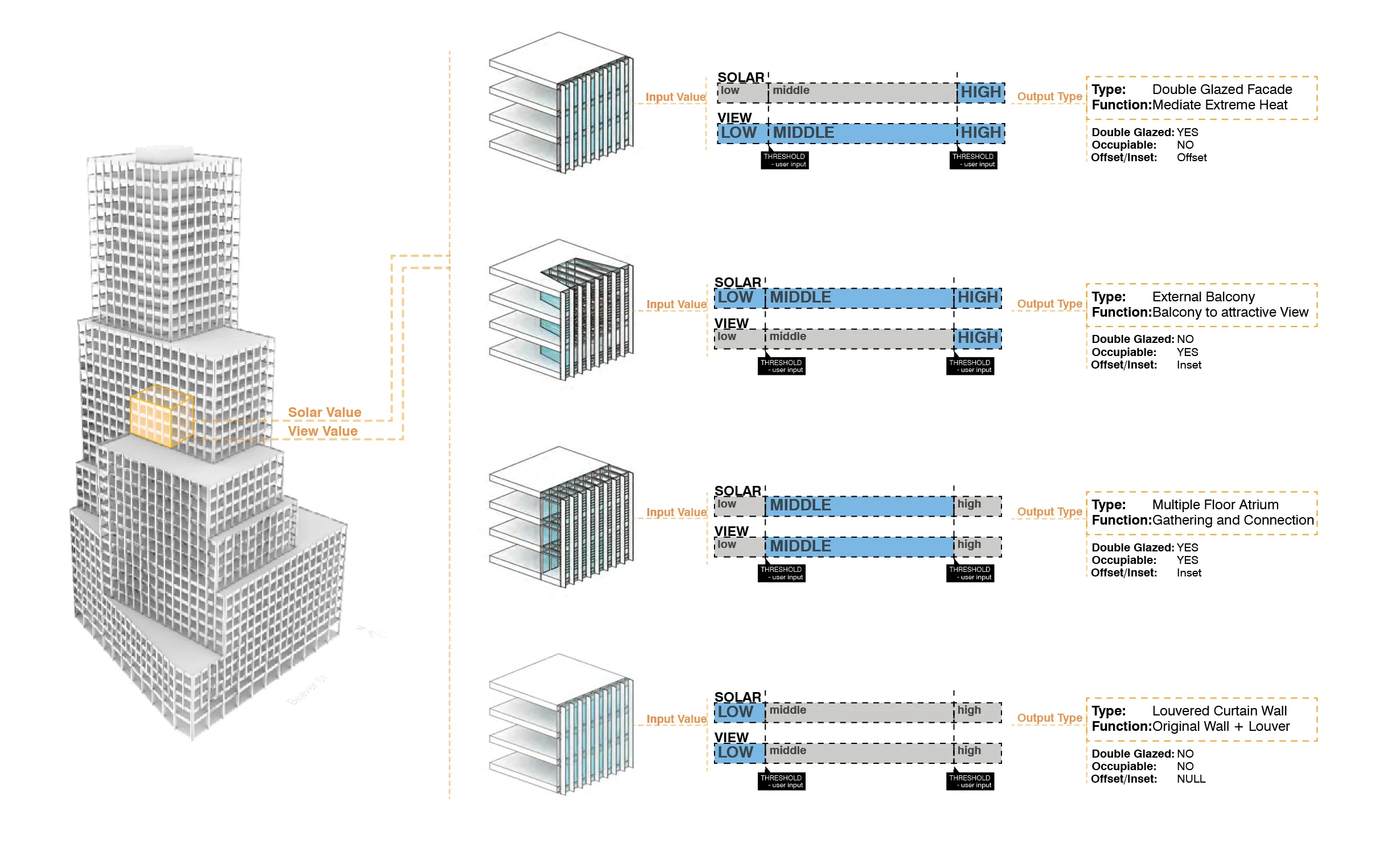
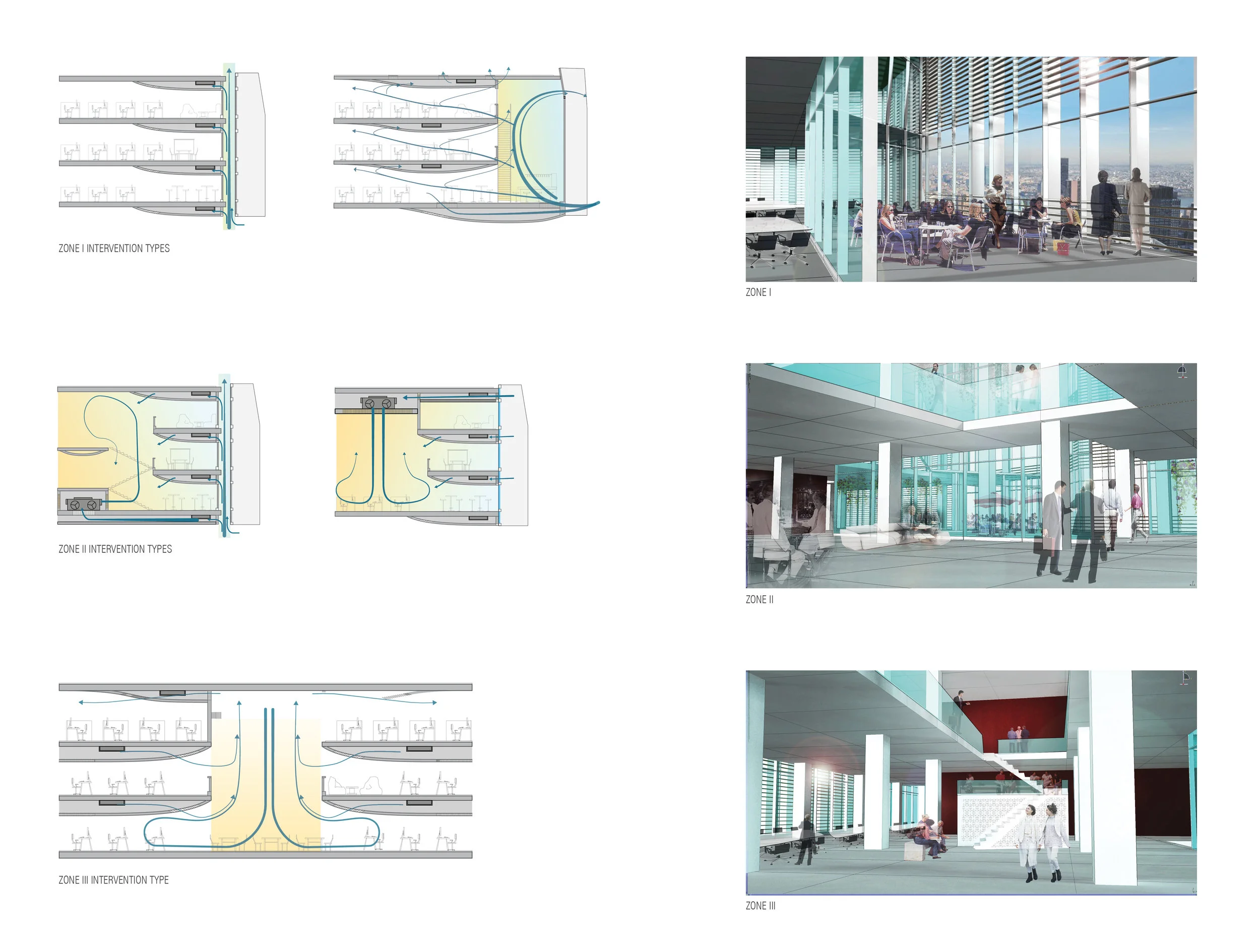
By defining several facade and slab cut intervention types for each zone, we were able to give the model the ability to suggest these, given a set of criteria defined by the architect.
By cutting slabs through intervention, the model generated a dead-load credit it could then use to suggest facade additions which stayed within this given value.
The technical section of the model I focused on was the synthesis of data coming in from the analytical tools into a slab cutter/facade suggestion tool. Further description of this specific tool is below the conclusion.
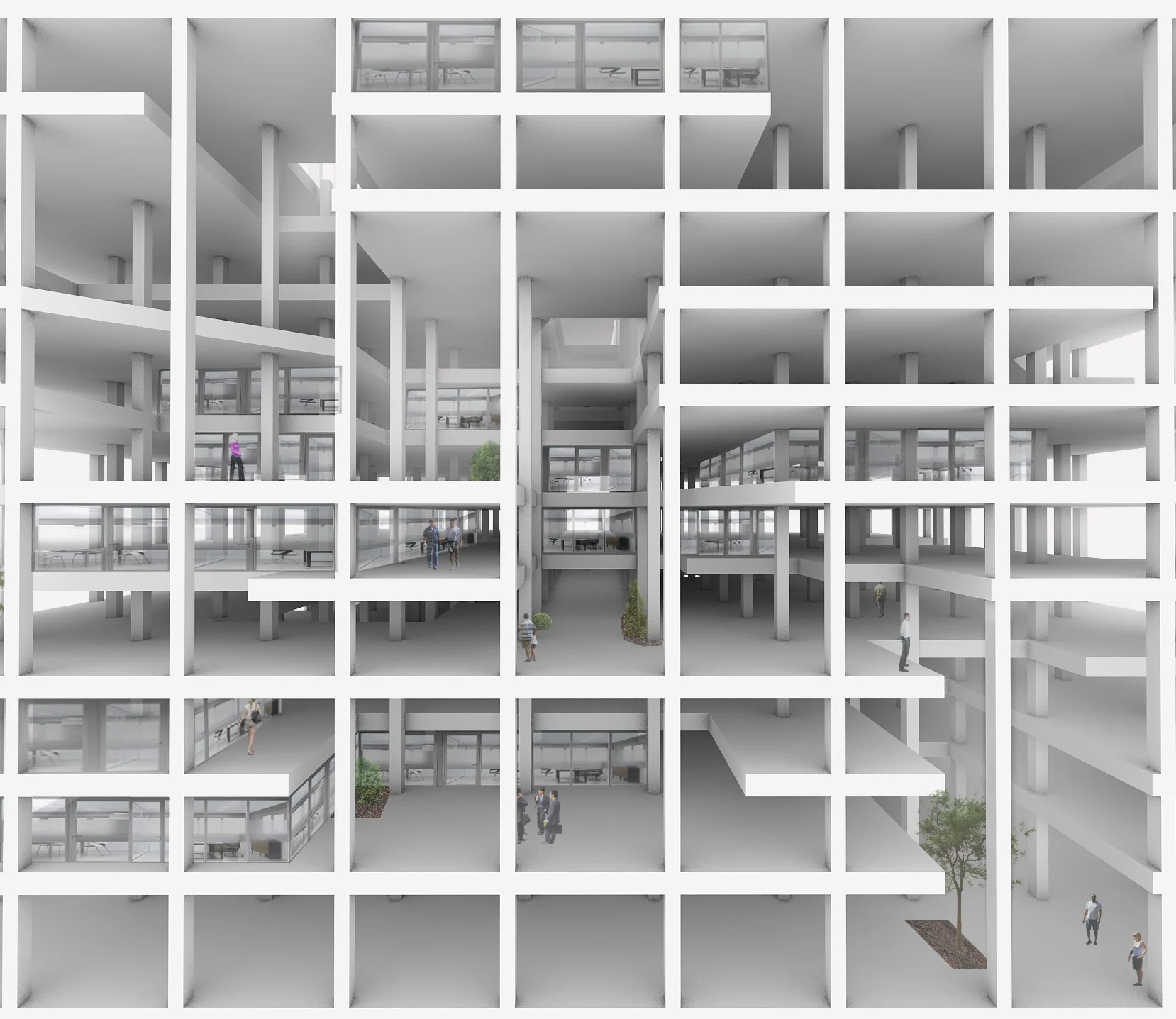
Study Conclusions
This experiment really pushed the boundaries of our technical knowledge as a team, both in engineering and in computer science. Our ultimate conclusions/insights came from several directions
1. Human input is always needed - we began the project by thinking we could create a model complex enough to tell us exactly how to cut a building to reach our goals. By the end we realized that no matter how complex your model becomes, it's really just a tool among many others in determining design direction.
2. Using the right tools are important - while hacking a particular tool to do what you want it to do instead of what it was meant to can be interesting and insightful, it can also result in many hours of unnecessary toil. Work smarter not longer.
3. Data driven design tools are the way forward - this one was not so surprising, but what was surprising was the depth of analysis and insight achieved through diving deep into the measurement of existing conditions. The recent ability to quantify environmental and human behavioral patterns can lead to design questions which could only be conceived of through this insight, and which ultimately could lead to highly innovative solutions.

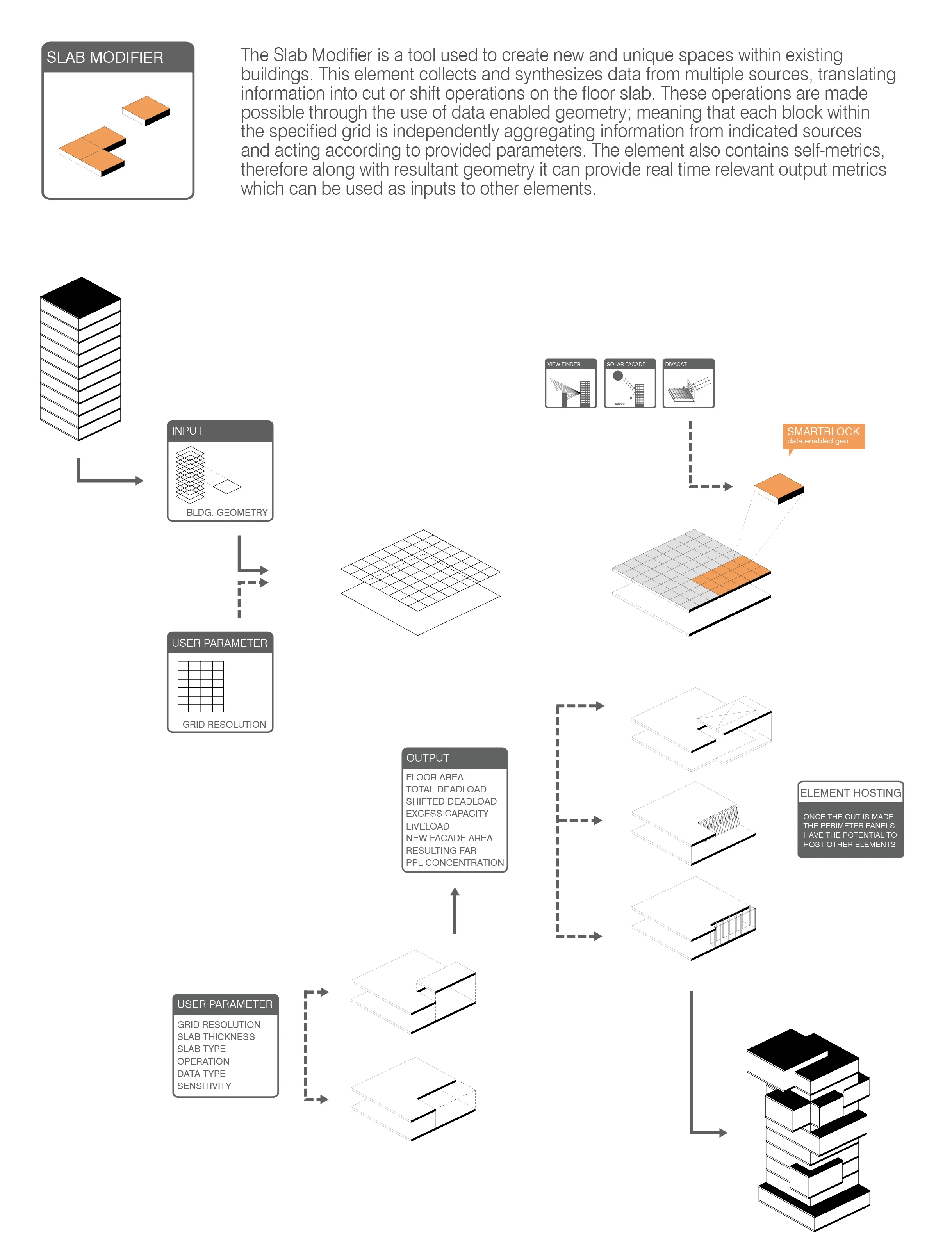
This section is a description of the tool we created to synthesize data coming in from our analytical tools. The tool was built in CATIA and pulled in data from other CATIA models as well as Rhino + Diva and Rhino + Grasshopper.
In hind sight, CATIA was the wrong program to use for the aggregation/master model. It is a program built specifically to create modular components for construction, and though it has the ability to synthesize data, it is a terrible tool for data sharing and interoperability between software. It also operated on it's own clunky programing language which is again not conducive to inter platform collaboration.
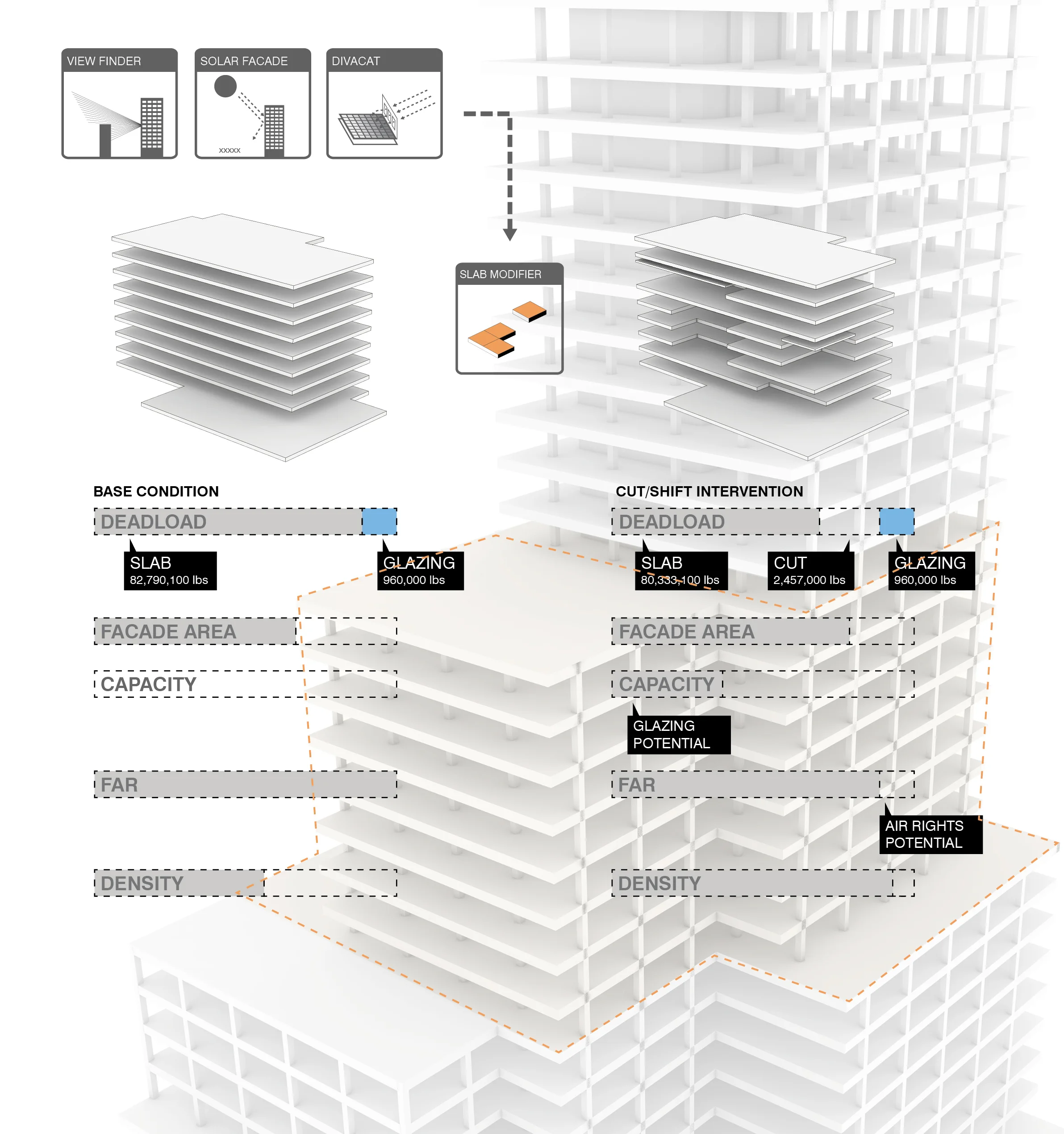

Original state
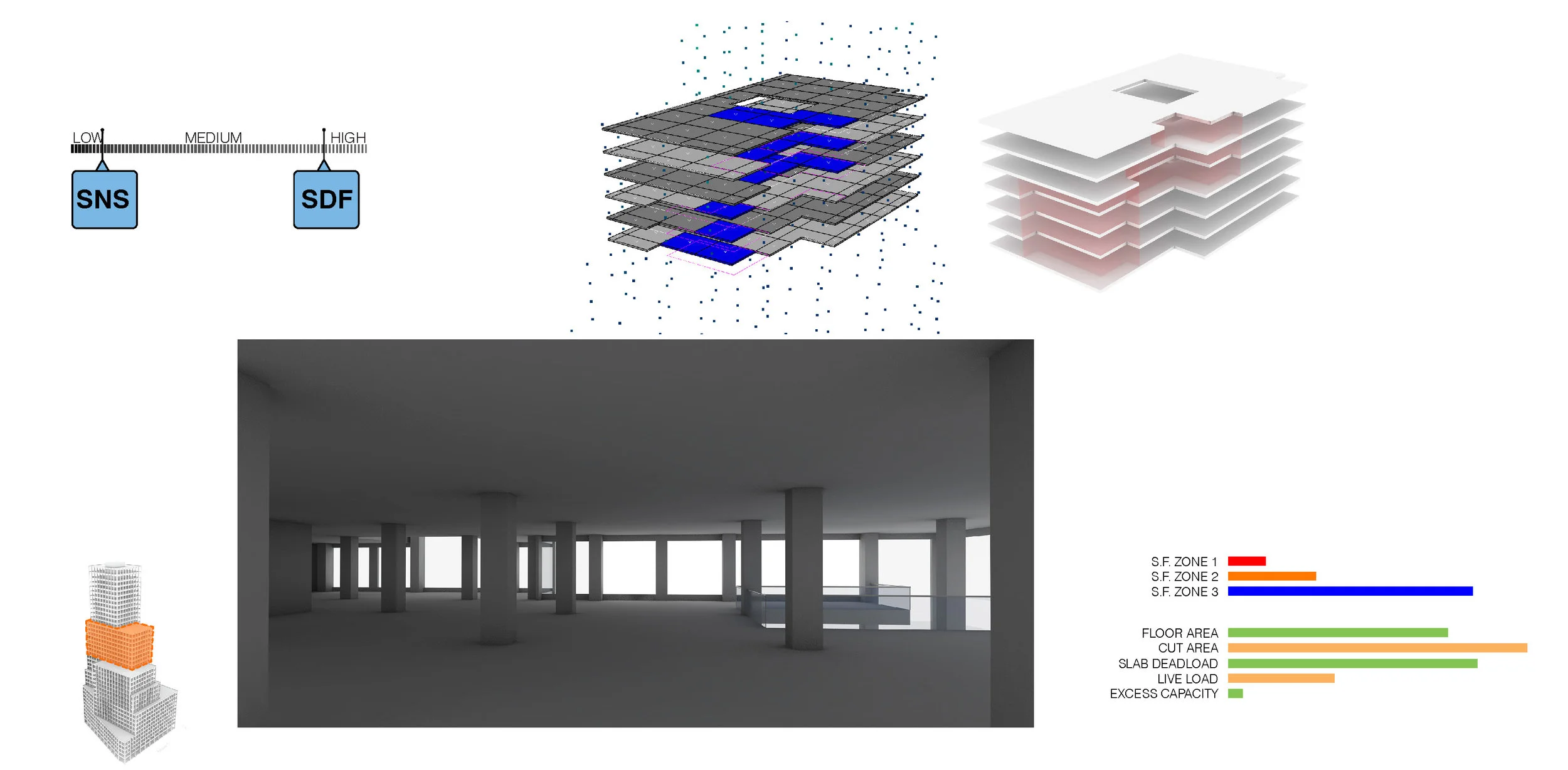
Cut 1 - low intervention
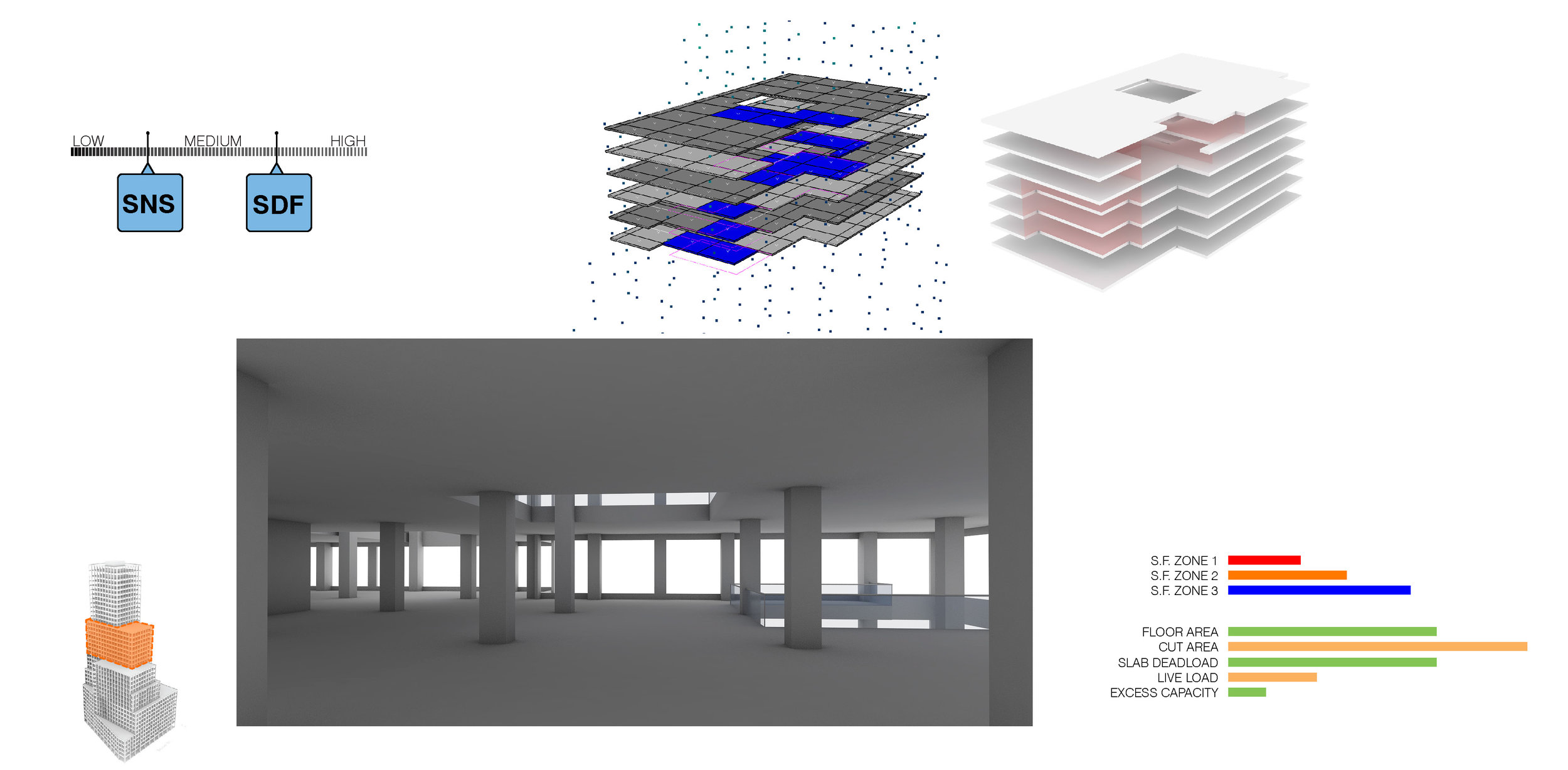
Cut 2 - medium intervention
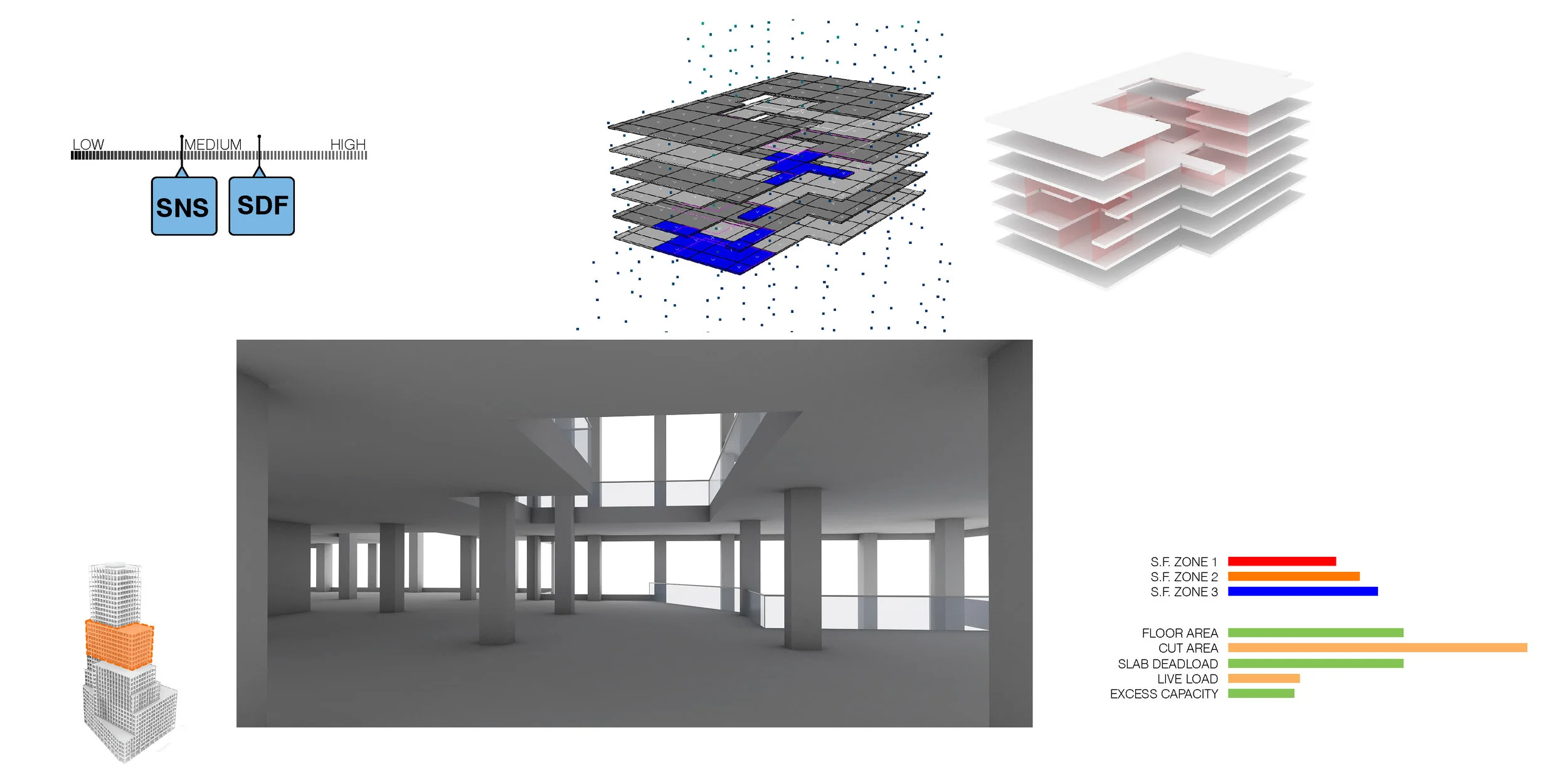
Cut 3 - high intervention